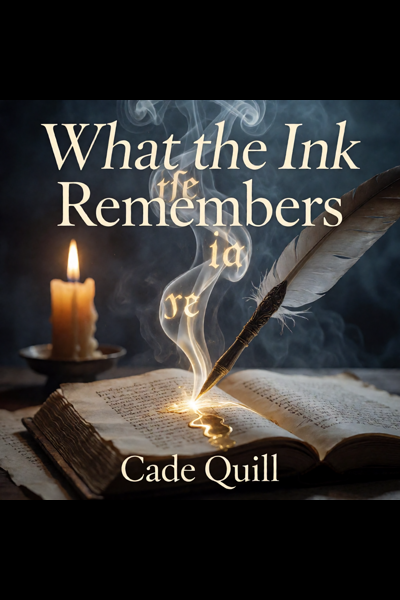
What the Ink Remembers
For seven winters, Theron Valdris has copied the same tax ledgers in the frozen scriptorium of Grenhold, his hand moving through grain and tithe with the mechanical precision of a man who stopped asking why. The ink in his pen is mute, obedient, forgetful, safe. Until the night it remembers. A Dead Scholar's unfinished manuscript surfaces from the Pale Library, its words writhing like living things, and the Concordat's High Pen decrees: every memory the ink carries must be burned. The Bound Ghost-Scribe, chained in the vaults beneath Elder Pell's keep, is the only counterweight. To release him means to unmake the silence that keeps the Village Children of Silent Tongues from screaming the old words back into the world. Theron is no hero. He is a ledger-clerk with ink-stained fingers and a growing terror that his own hand, the one that has written nothing original in seven years, is the very instrument the Hollow Author needs to rewrite the world's name. Sister Gilda warns him the cost of remembering is flesh. Archivist Selene offers a different currency: identity. Ysabel Crane, the Frontier Courier who brought the manuscript, wants it burned. Davin the Apprentice wants him to read it aloud. The Ink-Spirit of the Pale Library has been waiting for a scribe who is both obedient and unwilling. It is waiting for the Vision of Maren to pass through a mortal mind and anchor itself. Theron is that mind, whether he consents or not. The Concordat will send its erasers. The Hollow Author will send its revisions. And the children of Silent Tongues will finally speak a word that no scribe can copy, no ledger can hold, and no burning can unmake. The only question is whether Theron's hand stops long enough to let the ink choose what it remembers, or whether he grips the pen and writes the ending himself.