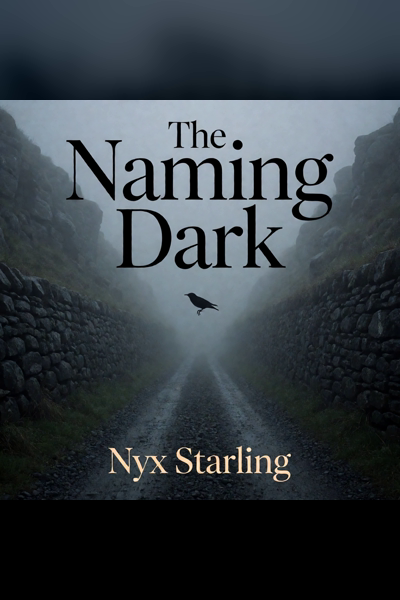
The Naming Dark
The gravel road ate the tires in short, irregular cracks, and three miles in, the GPS dropped its last satellite ping into the grey nothing. Mara Voss kept her hands at ten and two and drove into the breathing fog of Thornhollow Valley, where her family's dead have been kept in a ledger for four generations, and where the last entry is hers. The Thorne-Voss name is a curse written in wet stone. Silas Thorne went in alone and never came out. Margot's name appears in the ledger but her body was never found. Wren, Wren, who laughed, who lived, is simply marked gone. And now the ledger's final line is blank, the ink still wet, the page waiting. Pastor Jonah Creek, the valley's keeper of the record, tells Mara what her father Elias never did: the dark in Thornhollow is not a thing you find. It is a thing that finds you, names you, files you. It does not take lives. It takes identities. Every soul it claims becomes a line in the ledger, stripped of everything but a name, a date, and the sound of their last breath. And the dark has been patient, waiting for the last starling to speak the naming word and close the record. But the ledger is wrong. Dr. Lena Okafor's research into the valley's stone suggests the dark is not a single entity but a frequency, a resonance that amplifies grief into a living architecture of names. The entries aren't records. They're hooks. And someone has been erasing them, not to free the dead, but to feed the frequency something new to say. Mara can burn the ledger and let the valley keep its silence, or she can speak the word her mother's mother's mother held in her teeth and refused to pass down. Either way, the fog presses against the glass. Either way, the wiper cuts through every four seconds. The only difference is whether the next six feet of grey nothing is the last thing she sees, or the first thing she sees when the naming is done.