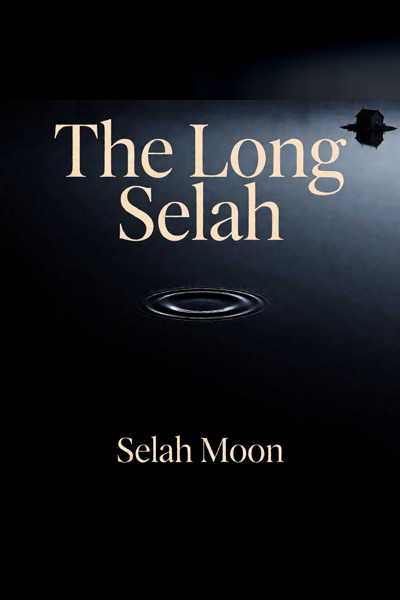
The Long Selah
Cycle 1,847 begins with silence, the kind of silence that has no bottom, no echo, no source. Maren Voss stands at the primary console of Selah Station's far-side listening array, her fingers tracing the input panel with the metronomic precision of a concert pianist who once played Rachmaninoff at two hundred beats per minute. For nineteen years the deep-listening array has broadcast nothing but the cosmic background hum. Then the calibration sweep catches a frequency just below the threshold of hearing, and for the first time in the station's existence, the static moves. The signal carries a structure Maren recognizes: the harmonic series of a note she played at a recital thirty years ago, the performance that ended in a silence so complete the audience did not applaud. The coordinate the signal originates from does not correspond to any star, any remnant, any object on any chart. It is a place that does not exist yet, or never did, or stopped existing. As the signal intensifies over the following cycles, the six crew members aboard Selah Station, Idris Kael, Zara Osei, Yuki Tanaka, Elias Wren, and the AI companion Finch, discover that the frequency is not merely being received. It is being answered. Each person on board responds to a different harmonic, and each response peels back a layer of something that has been waiting in the void for longer than the station, longer than the solar system, longer than the word for listening itself. Maren faces the choice that will define what comes next: shut down the array and seal the silence forever, accepting that the signal will find another way to transmit, or complete the selah, the long pause, and let the frequency resolve into its final note. If she plays the last movement, the void stops being empty. If she does not, the silence will outlast every name, every station, every frequency ever calibrated against the dark. The pause ends. The music begins. And what it plays is not for human ears.