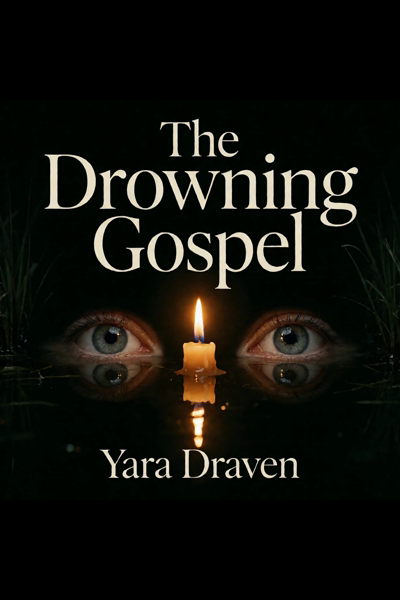
The Drowning Gospel
The storm that broke the marsh came down like a bone snapping clean, and what it delivered into the Voss hovel was not rain, it was a child with eyes already open. Maren Voss knows the marsh the way every family on the peat knows it: the water gives, the water takes, and the water always collects what was owed. But this child was not owed. It was born in the thunder's eye, in the gap between the last whispered prayer and the first raw wail, and Father Marrowstone says its eyes see the drowned gospel that has been rising through the peat for three generations. The Voss family, Willa, Ellis, and the restless Dory, now lives on a schedule of tides rather than meals. Old Satchell, who has cut peat since before the bell tower was built, carves each name into driftwood and burns them at the marsh edge so the water won't know how to find them. The Peat-Cutter's Wife, who speaks to the reeds the way other women speak to livestock, knows which stalks must stay standing so the water can drink without choking. And the Bell-Tower Boy, who no one remembers giving a name, sits in the steeple counting the hours between high tide and the moment the gospel surfaces. The conflict is simple and terrible: the drowned gospel needs a voice, and it is using Maren's child as the organ through which it speaks. Every lullaby, every psalm, every name spoken aloud in that hovel feeds the thing pooling beneath the marsh. Silence is survival. But a mother who must stop speaking to her child is a mother already drowning. The storm won't stop. The water is rising. The gospel is one verse from being spoken complete. Maren Voss will either hold her tongue and watch the marsh swallow her family one name at a time, or open her mouth and let the drowned word finish what the thunder started.